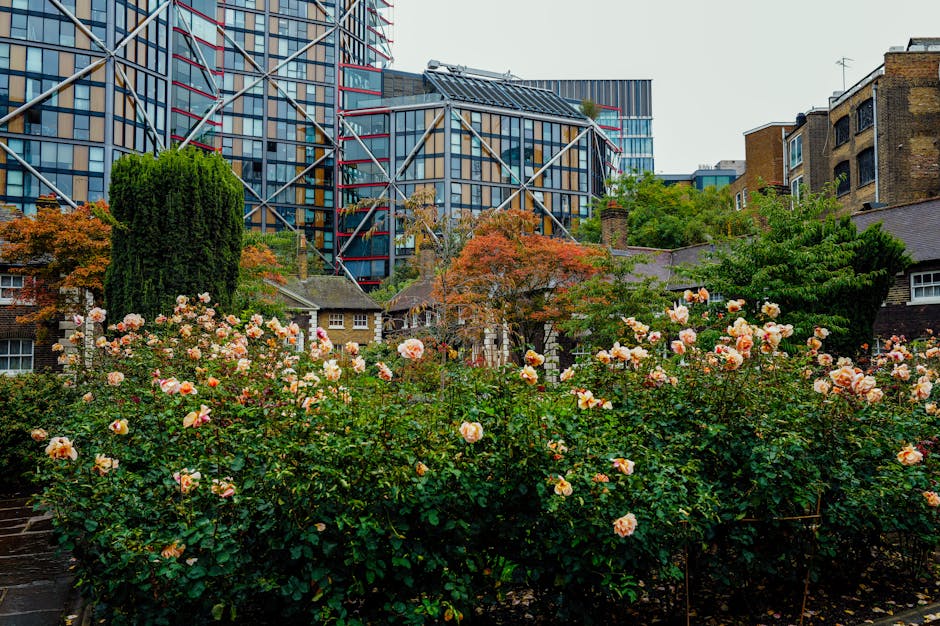
Common problems with communal garden maintenance in Aldgate estates
Communal gardens can make an estate feel calmer, greener, and far more welcoming. But if you live in or manage one in Aldgate, you'll know the reality can be a bit messier. Shared spaces need coordination, regular attention, and a clear plan - and when any of those slip, the garden quickly starts to show it. In this guide to Common problems with communal garden maintenance in Aldgate estates, we'll break down the issues that tend to crop up, why they matter, and what practical steps actually help.
Whether you're a resident, leaseholder, property manager, or freeholder, the same frustrations usually appear: uneven upkeep, missed visits, poor communication, access problems, and budgets that don't stretch as far as people hoped. Let's face it, communal gardens are where good intentions meet everyday reality.
Table of Contents
- Why these maintenance problems matter
- How communal garden maintenance usually works
- Key benefits of getting it right
- Who this is for
- Step-by-step guidance
- Expert tips for better results
- Common mistakes to avoid
- Tools, resources and recommendations
- Law, compliance, standards, and best practice
- Options and comparison
- Real-world example
- Practical checklist
- Conclusion
- Frequently asked questions
Why Common problems with communal garden maintenance in Aldgate estates Matters
A communal garden isn't just decoration. It affects how people experience the whole estate. When the grass is trimmed, hedges are neat, litter is removed, and beds are looked after, the space feels cared for. People use it more. Children play there more safely. Residents are less likely to treat it like a forgotten corner.
When maintenance goes wrong, the opposite happens. Weeds spread, paths become slippery, bin bags get left where they shouldn't, and the garden starts to feel neglected. In a dense urban area like Aldgate, where outdoor space is already limited, that decline is felt fast. One missed month can turn into three. Then the work gets bigger, more expensive, and more awkward for everyone involved.
There's also a social side. Shared gardens can become a point of friction if people feel they're paying for a service that's not being delivered properly. A patchy routine, unclear responsibilities, or poor standards can quickly lead to complaints. Not dramatic complaints, usually. More of the slow-burn kind that build up over time. And those are often the hardest to unwind.
Expert summary: The biggest communal garden problems are rarely about one single task. They usually come from weak planning, unclear responsibility, inconsistent visits, and a lack of follow-through.
How Common problems with communal garden maintenance in Aldgate estates Works
Communal garden maintenance is usually organised around a routine: mowing, hedge cutting, weeding, pruning, litter picking, border care, seasonal tidy-ups, and sometimes more specialist work such as tree management or hardscape upkeep. On paper, it sounds straightforward. In practice, a lot depends on access, weather, budget, resident cooperation, and the estate's layout.
Aldgate estates often have tight access routes, mixed-use buildings, shared entrances, and small but intensively used outdoor areas. That means maintenance teams may need to work around security doors, resident schedules, storage constraints, noise sensitivities, and limited parking. Not impossible, just less forgiving.
Problems usually appear in one of these areas:
- Scheduling: visits happen too infrequently or at the wrong time.
- Scope: the service list is vague, so residents expect more than the contract covers.
- Access: gates, keys, and entry arrangements are not properly managed.
- Plant health: shrubs, lawn edges, and trees are left to drift until they become costly to correct.
- Communication: no one knows what was done, what was missed, or why.
If you're comparing service options or reviewing an existing setup, it helps to look at the broader offer first. A clear services overview can make it easier to match the garden's needs to the right level of support.
Key Benefits and Practical Advantages
It might sound obvious, but regular maintenance is not just about making a garden look tidy. Good upkeep gives the whole estate a practical lift.
- Better safety: fewer trip hazards, less slippery build-up, and clearer sightlines.
- Lower long-term cost: smaller, regular tasks are usually easier to manage than emergency clearances.
- Improved resident satisfaction: people notice when shared spaces are looked after properly.
- Stronger property presentation: entrances and shared greens influence first impressions more than people admit.
- Healthier planting: shrubs, lawns, and trees respond better to consistent care than occasional rescue work.
There's a quieter benefit too. A well-kept communal garden can reduce tension. When everyone sees the space being maintained consistently, it becomes easier to accept the rules around use, storage, waste, and access. No one likes the feeling that maintenance is random. Consistency calms things down.
Who This Is For and When It Makes Sense
This topic matters to a fairly broad group, but the priorities differ depending on your role.
Residents and leaseholders
If you're paying service charges or contributing toward estate upkeep, you'll want to understand what should reasonably be included, what good maintenance looks like, and how to raise concerns if standards slip.
Property managers and managing agents
You need practical systems that work on the ground: clear schedules, responsive contractors, and a record of visits. A tidy spreadsheet is nice. A well-run garden is better.
Freeholders and landlords
For you, the main concern is asset value, resident satisfaction, and reducing avoidable complaints. A neglected communal garden can become a surprisingly visible signal that the wider estate is not being handled carefully.
Resident committees and housing associations
These groups often deal with the real-world compromise between expectations and budget. That usually means balancing appearance, safety, and fairness without overpromising.
If your estate has already gone a bit beyond routine upkeep, then services like garden clearance or regular garden maintenance may be the more sensible starting point than trying to patch everything at once.
Step-by-Step Guidance
Here's a practical way to think through communal garden maintenance problems without getting lost in the weeds - sorry, couldn't resist.
- Walk the garden properly. Look at the whole space in daylight, not just from the window. Check lawns, corners, beds, pathways, fences, drainage points, and access routes.
- List what is actually shared. Separate communal areas from private frontages, terrace spaces, or planter boxes that may sit outside the standard maintenance scope.
- Identify the recurring issues. Is the problem mowing, hedge growth, litter, weeds, overwatering, or occasional fly-tipping? Different problems need different solutions.
- Check the current schedule. Some gardens need weekly attention in spring and summer, then a lighter but still regular touch in winter. One fixed routine all year rarely works brilliantly.
- Agree response times for urgent issues. Fallen branches, broken edging, blocked paths, or storm damage should not sit in a queue indefinitely.
- Define who reports what. Residents should know where to send concerns, and managers should know who is responsible for actioning them.
- Review the work after each visit. A quick inspection catches missed corners before they become a pattern.
In estates with more mature planting, hedge care can become a big part of the picture. If shrubs are spilling over paths or blocking sightlines, hedge trimming often makes an immediate difference. And if tree growth is creating shade, root pressure, or safety concerns, tree lopping and removal may need to be assessed carefully and done with proper judgement.
Think of the whole process as rhythm, not rescue. Regular maintenance keeps the garden manageable. Rescue jobs are what you do when that rhythm has broken down.
Expert Tips for Better Results
Here are the small things that tend to separate a decent communal garden from one that stays consistently presentable.
- Use seasonal planning, not just a fixed checklist. Spring growth, summer watering needs, autumn leaf fall, and winter damp all change the job.
- Keep the edges sharp. Borders, lawn edges, and path lines make a surprisingly big visual difference. A garden can look half as good with neat edges and fewer weeds, even if the planting is modest.
- Don't ignore "minor" issues. A small patch of moss or a few self-seeded weeds can spread fast in communal areas where no one feels personally responsible.
- Plan access in advance. If keys, codes, or permits are needed, make sure they are ready before the visit. The number of wasted appointments because of access hiccups is honestly a bit embarrassing.
- Match tasks to usage. A quiet courtyard needs a different approach to a busy estate garden with lots of foot traffic and children moving through it daily.
One practical detail that gets overlooked: waste handling. Green waste, cuttings, and cleared material should be removed responsibly. If a contractor offers a tidy finish but leaves the rear service yard piled up with debris, the job is only half done. Reputable maintenance should align with sensible recycling and sustainability practices where possible.
And yes, a little communication goes a long way. A short update after each visit - what was done, what was left for later, what needs attention next month - can stop three unnecessary emails and two annoyed phone calls. That alone is worth something.
Common Mistakes to Avoid
Most communal garden problems are not mysterious. They come from a few predictable missteps that keep repeating.
- Assuming everyone agrees on standards. One resident's "fine" is another resident's "this looks neglected". Spell out expectations.
- Choosing the cheapest option without checking scope. A low price can be fine, but only if the service actually covers what the estate needs.
- Leaving hedges and trees too long. Once growth becomes excessive, the work gets slower and more disruptive.
- Skipping winter or shoulder-season visits. Gardens do not politely pause growing just because the weather is colder.
- Ignoring hard landscaping. Steps, decking, paths, and planting surrounds can all affect safety and presentation.
- Failing to log complaints. If there's no trail, the same issue tends to reappear under a different name next month.
A common one is expecting garden maintenance alone to solve structural problems. If the layout is awkward, drainage is poor, or seating areas are worn out, maintenance helps but doesn't magically fix design issues. In that case, a broader review through landscape gardening or landscaping may be the better route.
Truth be told, people often notice the missed jobs more than the finished ones. That's just how shared spaces work.
Tools, Resources and Recommendations
You do not need a huge toolkit to keep a communal garden under control, but the basics should be reliable and appropriate to the site.
- Strimmers and mowers: useful for lawns, edges, and awkward corners when used safely and correctly.
- Secateurs, loppers, and pruning saws: for targeted cutting of smaller growth and light woody material.
- Rakes and blowers: for leaves, clippings, and seasonal tidy-ups.
- Wheelbarrows and waste bags: simple, but essential for efficient clearance.
- Inspection notes or visit logs: helpful for property managers who need a record of what was done.
For many estates, the most useful resource is not a tool at all. It is a clear service plan. If the garden is being left to drift, the first practical fix is often a reset: cut back overgrowth, remove waste, restore boundaries, then return to a manageable routine. That's where lawn mowing and general upkeep can make the space feel usable again quite quickly.
If you're unsure what level of support is needed, a broad review of the estate's condition is usually better than guessing. A quick site look can reveal whether the main issue is routine maintenance, one-off recovery work, or a mix of both. That mix is common. More common than people think.
Law, Compliance, Standards, and Best Practice
For communal garden maintenance in Aldgate estates, the legal and compliance picture depends on ownership, lease terms, management agreements, and the specific work being carried out. It is sensible to be careful here: obligations can vary, and any estate should check its own documents rather than rely on assumptions.
What usually matters in practice is this:
- Health and safety: maintenance work should be carried out with appropriate care around trip hazards, tools, debris, and access routes.
- Insurance: contractors should have suitable cover for the work they are doing.
- Resident access and safeguarding: work should be planned so it does not create avoidable disruption or unsafe conditions.
- Waste handling: cuttings and debris should be disposed of responsibly.
- Contract clarity: the scope of work should be plain enough that everyone understands what is included.
It is also worth paying attention to documented policies. For example, a contractor's health and safety policy and insurance and safety information can be a useful check before any ongoing arrangement is agreed. That doesn't solve the garden by itself, obviously, but it does show whether the basics are being taken seriously.
Best practice is usually simpler than people expect: clear scope, regular visits, safe working methods, accessible communication, and a review process when things go wrong. If you need help turning a messy estate garden into something more manageable, a contractor's broader approach matters too. You can learn more about the company background on the about us page and see how enquiries are handled through the contact us page.
Options, Methods, or Comparison Table
Different estates need different approaches. A small courtyard is not the same as a large shared green with hedges, borders, and scattered trees. Here's a simple comparison to help frame the decision.
| Method | Best for | Strengths | Limitations |
|---|---|---|---|
| Routine maintenance visits | Well-kept communal gardens with light to moderate growth | Predictable, easier to budget for, keeps standards steady | May not be enough if the space is already overgrown |
| One-off clearance | Neglected or recently inherited estates | Fast reset, useful for reclaiming a space | Does not prevent the problem returning without follow-up |
| Combined maintenance and landscape review | Spaces with recurring design or drainage issues | Addresses both upkeep and layout weaknesses | Usually takes more planning and coordination |
For many Aldgate estates, the most practical answer is a combination: restore the garden first, then keep it steady with planned maintenance. If the space has been neglected for a while, garden clearance may be the sensible first move before anything else. Then a regular routine can take over.
Case Study or Real-World Example
Imagine a small residential estate near a busy London road. The communal garden is tucked behind the building, so it is not visible from the street every day. That sounds ideal, until the space slowly starts slipping.
First, the mowing gets delayed because access is awkward. Then the hedges are left a little longer than planned. A few weeds appear at the edge of the paving. Nobody panics, because it still looks "mostly okay". Then autumn arrives, leaves gather in the corners, and the path feels damp underfoot in the mornings. A resident mentions it in passing. Another raises it at a meeting. By the time someone asks for action, the garden has gone from low-maintenance to mildly embarrassing.
The fix was not dramatic. The estate did not need a redesign from the ground up. It needed a proper reset: clear out the clutter, trim back growth, restore the lawn edges, agree a realistic visit pattern, and confirm who had key access each time. A few weeks later, the space looked calmer, cleaner, and much more usable. Not glamorous. Just looked after. Which, in a communal garden, is usually the real win.
That kind of turnaround is exactly why consistent garden maintenance matters. The improvement often feels subtle at first, then suddenly obvious once people start using the space again.
Practical Checklist
Use this checklist if you're reviewing the maintenance setup on an Aldgate estate.
- Are the communal boundaries clearly defined?
- Is there a written maintenance schedule?
- Do residents and managers know who to contact with issues?
- Are mowing, hedge cutting, and weeding happening often enough for the season?
- Are paths, entrances, and steps being kept clear?
- Is garden waste being removed properly?
- Are any trees or large shrubs being monitored for safety and overgrowth?
- Is there a process for handling complaints and repeat issues?
- Are contractors insured and working safely?
- Does the current approach still match the actual condition of the site?
If you answer "no" to more than a couple of those, it may be time to review the arrangement in a more structured way. No drama. Just a tidy reset and a better system.
Get a free quote today and see how much you can save.
Conclusion
The most common problems with communal garden maintenance in Aldgate estates are usually not complicated: unclear responsibility, irregular visits, poor access planning, reactive repairs, and inconsistent standards. But once those issues start stacking up, they affect safety, appearance, resident satisfaction, and long-term cost.
The good news is that shared gardens respond well to a practical approach. Clarify the scope. Set a rhythm. Keep communication simple. Deal with small issues before they become big ones. And when the space needs a reset, treat it as a reset - not a failure.
Handled properly, a communal garden can become one of the estate's most valuable everyday assets. Quietly useful. Pleasant to look at. Better to walk through on a damp London morning. And, honestly, that makes a difference.
Frequently Asked Questions
What are the most common communal garden maintenance problems in Aldgate estates?
The most common issues are missed mowing, overgrown hedges, weeds, litter, poor access, unclear responsibilities, and inconsistent scheduling. In many cases, the problem is not one task but a lack of joined-up maintenance.
Why do communal gardens get neglected so quickly?
Because they belong to everyone and no one in particular. If the schedule is vague or residents assume someone else will report issues, small problems can sit unattended until they become obvious.
How often should a communal garden be maintained?
That depends on the size of the space, planting type, and season. During active growing months, many communal areas need regular attention, while winter may require less frequent but still planned visits.
What should be included in communal garden maintenance?
Typical tasks include lawn mowing, hedge trimming, weeding, pruning, litter collection, border tidying, leaf clearance, and checking for overgrown or unsafe growth. Some estates may also need tree work or clearance support.
Who is responsible for communal garden upkeep in an estate?
It depends on the estate structure and the management arrangements in place. Responsibility may sit with a managing agent, freeholder, housing association, or a residents' committee. The key is that it should be clearly defined.
Can poor communal garden maintenance affect service charge complaints?
Yes, it can. If residents feel they are paying for a service that is not being delivered properly, complaints often follow. Clear scope, regular updates, and visible work all help reduce that risk.
What is the difference between garden clearance and regular maintenance?
Garden clearance is usually a one-off or occasional reset to remove overgrowth, debris, and heavy build-up. Regular maintenance is the ongoing work needed to keep the space in good condition after that reset.
How do I know if an estate needs landscaping rather than just maintenance?
If the garden keeps developing the same problems because of poor layout, drainage, awkward access, or unusable planting areas, a wider landscaping review may make more sense than maintenance alone.
Is hedge trimming important in communal gardens?
Very. Hedges can quickly block light, reduce visibility, narrow paths, and make the space feel cramped. Regular trimming helps keep the garden safer and tidier.
What should I check before hiring someone for communal garden work?
Check that the scope is clear, the contractor understands the site, they have suitable insurance, and they follow safe working practices. It also helps if they can explain how waste and access will be handled.
Can communal gardens include decking or hard landscaping?
Yes, and those features need maintenance too. Decking, paved paths, and other hard surfaces can collect moss, debris, and wear over time. They should be reviewed alongside the planting areas, not ignored.
What is the best first step if the garden is already overgrown?
Start with a proper clearance and assessment. Once the site is back under control, it is much easier to set a realistic routine and avoid the same build-up happening again.
How can residents help improve communal garden standards?
Residents can report issues early, keep shared areas free from personal clutter, respect access arrangements, and support a realistic maintenance plan. Small cooperation often makes a big difference in a shared space.